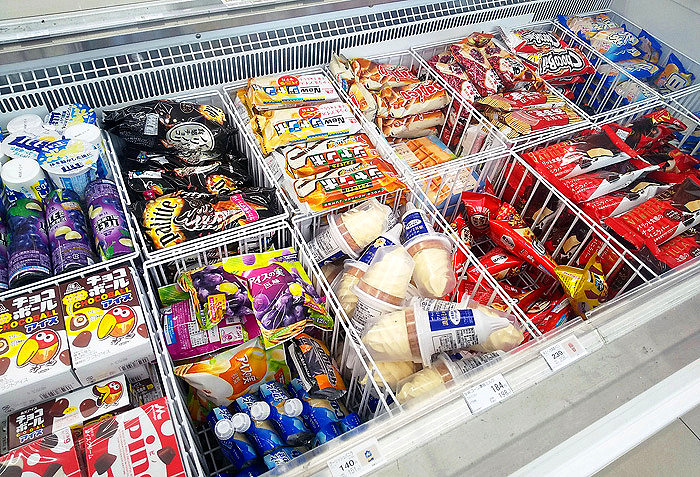
The ice cream market is also expected to post record-high sales in fiscal 2025 (April 2025 to March 2026), but a change has emerged in the long-assumed pattern that “if it’s hot, it sells.” As climate change progresses and people’s behavior changes, there have been cases where sales have failed to grow even during extreme heat.
A symbolic example was last August. Even though temperatures rose nationwide, manufacturers said sales were sluggish. In addition to people avoiding going out under extreme heat, the product’s characteristics—such as melting easily while in transit—also likely had an impact. In response to the prolonged extreme heat, moves to delay shelf resets also spread.
Such environmental changes are affecting consumption occasions as well. Traditionally, ice cream was chosen as a “cool-down use” to cool the body in midsummer, but in recent years demand for enjoying it in air-conditioned rooms has expanded. Even in summer, the tendency to choose cream-based ice cream is strengthening. Consumption occasions are shifting from “consuming to cool off” to “dessert consumption that emphasizes satisfaction.”
Manufacturers are shifting from selling different items by season to developing year-round products. Cream-based makers are advancing products that can be used in both summer and winter, while companies focused on frozen desserts are moving to strengthen cream-based lines.
Akagi Nyugyo will adjust milk fat content and sweetness seasonally with “Sof” to capture year-round demand. Futaba Foods changed “Dandy Vanilla” to “Dandy Milk,” which has a cleaner aftertaste that makes it easier to eat even in summer. Marunaga Seika is renewing its “Shirokuma” bar this spring to enhance the richness and smoothness of the milk.
New product proposals with fresh angles are also expanding. Lotte will launch “Falling in Love with Asia” on April 6, its first new brand in about 10 years. Against the backdrop of Japan’s “subtropicalization,” it will promote new value such as exotic flavors and aromas.
Climate change is not only altering the sales environment but is also changing the demand structure itself. As the conventional assumptions are shaken, how demand can be created starting from consumption occasions will determine future market growth.