Key Coffee is providing support for sustainable coffee production in Ethiopia, which is said to be the country of origin of Arabica coffee.
In 2024, the company was commissioned by Japan’s Ministry of the Environment to carry out the “Fiscal 2024 Proposal Project for a Brighter Future for Small-Scale Coffee Producers Vulnerable to Climate Change.”
Since August 2025, it has participated in the Japan International Cooperation Agency’s (JICA) “Ethiopia Coffee Development Strategy Support” project, conducting surveys of production conditions and supporting variety improvement. The project is scheduled to run for two years.
On July 16, the company held a media presentation at the Embassy of the Federal Democratic Republic of Ethiopia in Japan, located in Minato Ward, Tokyo, introducing an overview of the support and the characteristics of Ethiopian coffee.
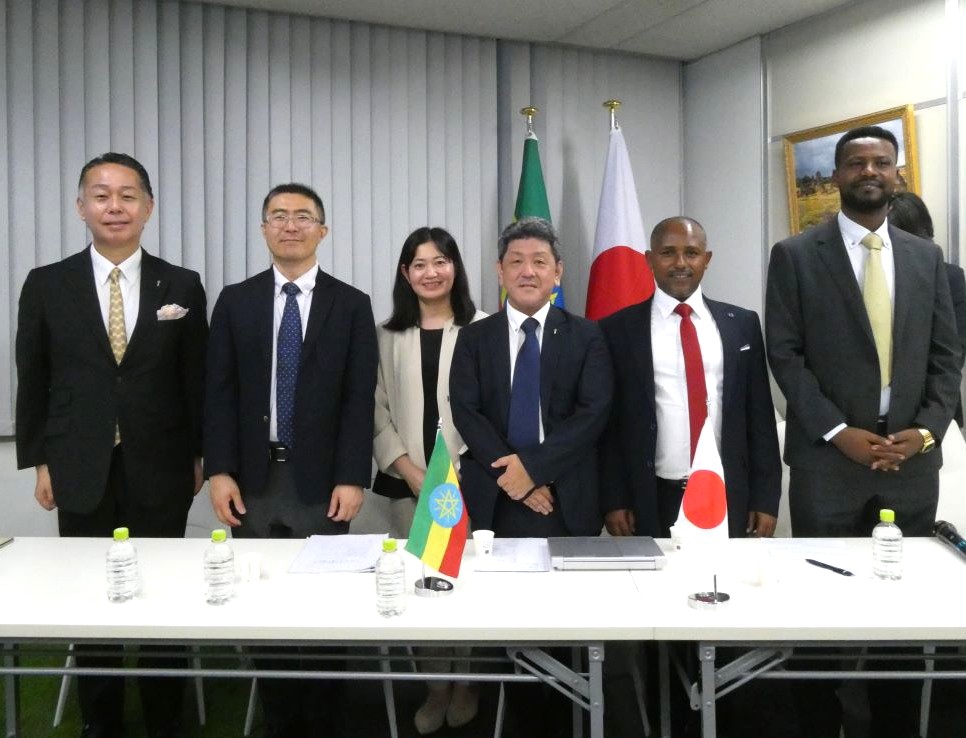
Ambassador Extraordinary and Plenipotentiary Daba Debele of the Embassy of the Federal Democratic Republic of Ethiopia in Japan, who delivered remarks remotely, expressed his gratitude, saying: “JICA’s support for establishing regional brands and raising the incomes of small-scale farmers is highly meaningful and plays an extremely important role in realizing the great potential of Ethiopia’s coffee industry.”
Key Coffee has five employees from its Coffee Future Department providing support locally as JICA short-term experts. They are working as a task-force team together with members of the Ethiopian Institute of Agricultural Research (EIAR) and the Ethiopian Coffee and Tea Authority (ECTA).
Key Coffee President Hiroshi Shibata reflected: “Through this project, I was deeply impressed that Ethiopia and Japan have been able to deepen their mutual understanding not only as a coffee-producing country and a coffee-consuming country, but also toward a relationship in which we join forces to protect the future of coffee.”
Jun Yamazaki, Team Leader of Team 4, Group 2 for Agriculture and Rural Development, Economic Development Department at JICA, explained: “With Key Coffee’s full cooperation, we are working toward the sustainable development of the coffee industry, improving the livelihoods of local small-scale producers, and, in the future, the appropriate conservation and utilization of genetic resources.”
Hirokazu Fujii and Naoko Arinaga, who are working as short-term experts, suggested that the diverse genetic resources of Ethiopia’s coffee plants could play a major role in variety development.
Fujii pointed out: “At present, coffee variety development prioritizes varieties that are resilient to environmental changes and diseases in response to climate change, and there is a possibility that flavor characteristics may be lost. Environmental tolerance and disease resistance are essential prerequisites, but the coffee industry also wants to preserve richness of flavor.”
Dr. Tadere Mamo of EIAR and Bonsa Merga of ECTA, who are visiting Japan on a study tour, said that they would like to learn about plant breeding in Japanese agriculture and apply the perspective of a consuming country to local coffee production.
In a video message, Dr. Vern Long, Chief Executive Officer of World Coffee Research (WCR), commented: “This partnership between Ethiopia and Japan will serve as an important bridge linking Ethiopia’s agricultural potential with Japan’s coffee market.” He also expressed his intention to continue supporting sustainable coffee production.
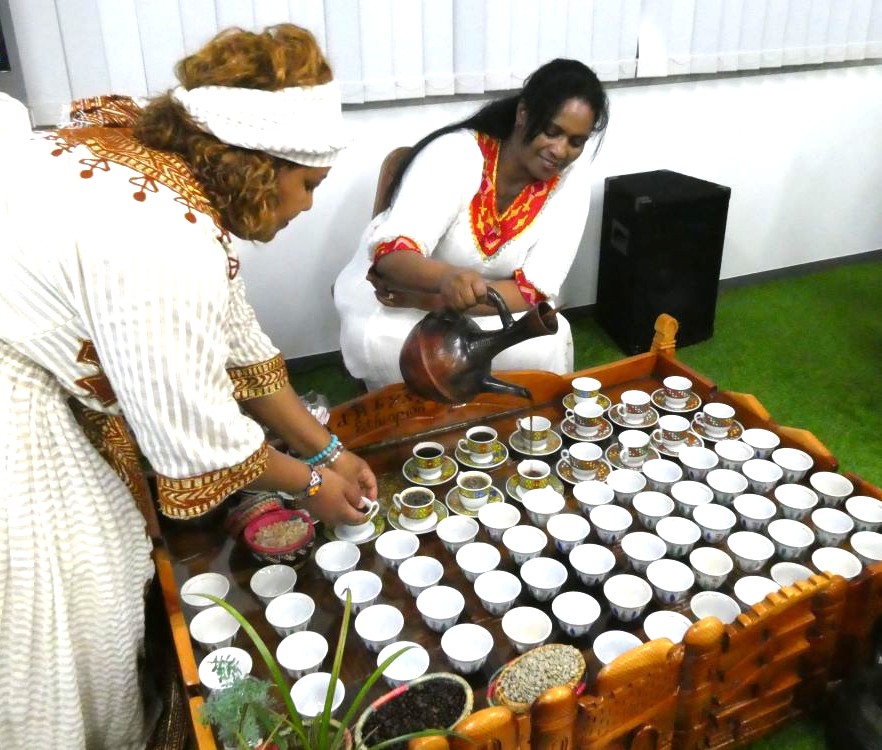
A coffee ceremony was also held at the presentation, introducing the distinctive flavor profile of Ethiopian coffee and local ways of drinking it, including the addition of salt and herbs.