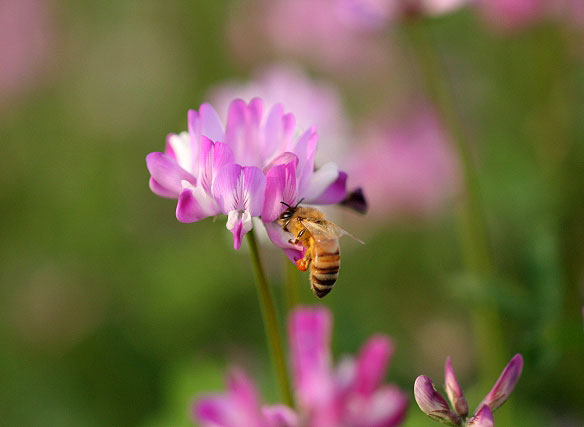
With rapeseed flowering, Japan is about to enter the domestic honey-harvesting season. This season, however, domestic honey production is at risk due to an unprecedented shortage of honeybees. Bee shortages are usually often caused by mites occurring in hives, but this year, a phenomenon in which honeybees suddenly disappear from hives has been occurring throughout Japan. Honeybees are also indispensable in agriculture for pollinating fruit, vegetables, and other crops. However, beekeepers say, “Even when farmers ask us, we cannot lend them bees.”
The phenomenon of honeybees disappearing from hives was reported around 20 years ago in Europe, the United States, and Japan as colony collapse disorder (CCD), and its cause has still not been identified. The Japan Beekeeping Association has received reports that colonies have been halved not only at major domestic beekeeping groups such as Fujii Apiary and Sugi Bee Garden, but also among medium-sized beekeepers. “Even if new colonies are raised, honey collection may not be in time for some flowers,” the association says. Domestic honey has long been scarce and expensive in absolute volume due to a shortage of successors, declining nectar sources, and other factors, and it appears that its rarity will increase further.
While domestic honey faces a crisis due to disappearing honeybees, the industry has begun taking action to solve issues involving imported honey. The foremost issue concerns low-priced products. In recent years, finished table-honey products filled at factories in producing countries such as China have been imported and sold at drugstores and supermarkets in Japan at price points of around 600 yen per kilogram. Because of their overwhelming affordability, more than 10,000 tons are now imported annually, posing a threat to national brands.
As industry stakeholders scratch their heads, saying that “when costs for raw materials, packaging materials, exchange rates, transportation, inspections, and other items are added up, such a supply price is impossible” (a major packer), the answer that emerges recalls a bitter memory. About 20 years ago, there was also an adulteration problem in which honey was mixed with isomerized sugar and sold as pure honey. Illegal acts by some importers damaged the credibility of the entire honey industry.
Since then, industry bodies—including the National Fair Trade Honey Council, the All Japan Honey Cooperative Association, and the Japan Honey Importers Association—have worked together. At Japan-China bee-product meetings, they have requested that Chinese authorities and related parties strengthen enforcement. At the same time, in Japan, they have worked with relevant parties to warn companies importing and selling adulterated products and to develop definitive testing methods to determine adulteration.
As a result, using the new “foreign amylase testing method” last year, more than 10 locally filled products marketed as 100% pure honey were found to be adulterated. Information has been provided to the Consumer Affairs Agency regarding possible violations of the Act against Unjustifiable Premiums and Misleading Representations, and to the National Tax Agency regarding possible violations of the Customs Act. The relevant authorities appear to be conducting verification work at present.
All products identified as adulterated in the test results are made by companies that do not belong to industry associations. There are concerns that administrative guidance could cause reputational damage. Although affordability is naturally an important criterion in product selection, the ethics of importing companies—and of retailers selling such products—will also be called into question. Bad money must not drive out good; good money must drive out bad.