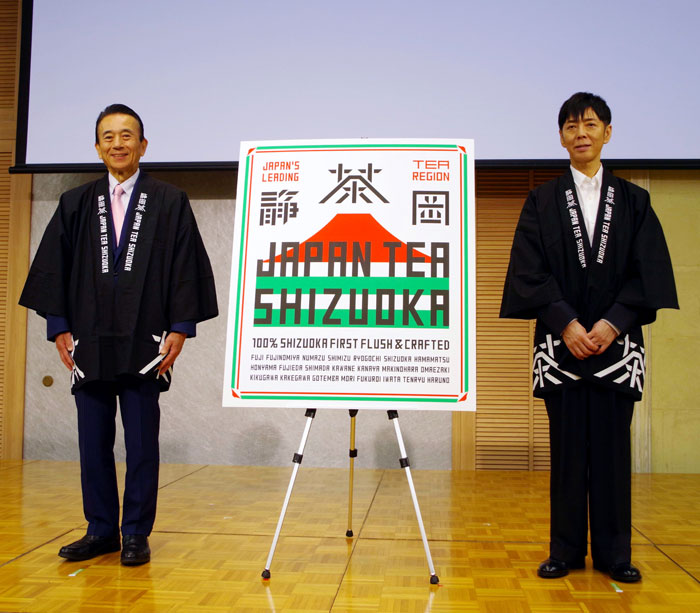
Branding of Shizuoka tea for the global market has begun in earnest. On April 14, general producer Kashiwa Sato announced the brand name, brand logo, and action plan. Shizuoka Governor Yasutomo Suzuki declared the launch of the Shizuoka tea brand.
In December 2024, Shizuoka Prefecture began the “Shizuoka Tea Rebranding Project” with the aim of expanding exports. In June 2025, creative director Sato was appointed general producer through an open call. Tea-industry stakeholders in Shizuoka Prefecture have since worked together on the initiative as a “branding,” rather than “rebranding,” project.
At the announcement event held at Hotel Associa Shizuoka on the 14th, Sato set the project’s objective as “premium global branding”—raising and communicating the premium value of Shizuoka tea to the world.
The brand-building process begins with brand “awareness,” but the Shizuoka tea brand has not achieved recognition internationally at all. “The most important issue is first to make people aware of it,” he explained, and outlined the brand’s details intended to expand awareness.
The brand name is “JAPAN TEA SHIZUOKA.” It quotes the term “JAPAN TEA,” used on Ranji labels that were once affixed to wooden boxes containing Japanese tea for export, thereby encompassing the three elements of “Shizuoka,” “tea,” and “Japan.” By using English lettering that can be communicated globally, the goal is to build the brand internationally around the idea that “Japanese tea equals Shizuoka.”
The brand is defined as “100% first-harvest tea leaves produced in Shizuoka Prefecture and 100% final processing carried out within Shizuoka Prefecture.” By communicating at the same time the quality of locally grown first-harvest tea leaves and the high level of finishing and processing techniques, it aims to increase the brand’s premium value and create a ripple effect that enhances the brand value of Shizuoka’s entire tea industry.
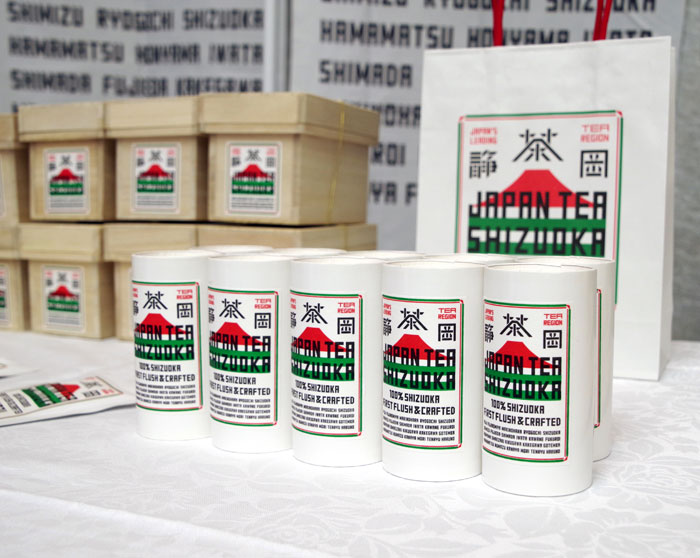
The brand logo was developed under the concept of “modern Ranji.” Using Mount Fuji—specifically Red Fuji—as a symbol of Japan and Shizuoka, together with tea fields as motifs, the brand name is written in a newly created original typeface. English wording was added to position Shizuoka as “Japan’s Leading Tea-Producing Region,” and the names of 22 production areas are also included, along with the kanji characters for “Shizuoka” and “tea.” While attracting attention through its line-based design and vivid red and green colors, the logo fosters an understanding of Shizuoka tea ranging from its history and present standing to the diversity of its producing areas.
Alongside the announcement, a website was launched. Future action plans include announcements and exhibitions overseas, the creation of official novelty items, development of original products, tea tourism, and demand surveys in Japan and abroad. Sato said that the most important point is “co-creation”: “I hope not only project members but all of Shizuoka Prefecture can bring Shizuoka tea to the world.”
Next, strategy adviser Yoshimoto Obara emphasized that “world-class tea tourism” is “a tea industry revolution” that changes the unit and price point at which value is created—from one gram of tea leaves to one cup’s experience.
Fellow strategy adviser Ryo Iwamoto cited overseas examples where matcha tonic is preferred over matcha latte, stressing the significance of demand research.
Governor Suzuki said, “Shizuoka has undoubtedly led Japanese tea. I would like every stakeholder to serve as an ambassador and spread the value of Shizuoka tea in Japan and abroad,” declaring the start of the brand.