Imports of Spanish pork and related products have been halted, raising concerns about the impact on related industries. In addition to fresh meat, imports of Spain’s prized cured ham (prosciutto) have also been suspended. Spanish prosciutto had become an established substitute for Italian prosciutto, which remains under its own import ban, and the loss of access to Spanish supply is expected to cause widespread disruption across distribution and foodservice sectors.
The Ministry of Agriculture, Forestry and Fisheries imposed a temporary suspension on imports of Spanish pork products effective November 28, following an outbreak of African Swine Fever (ASF) in wild boars in Spain.
Spain is Japan’s third-largest source of pork imports, after Canada and the United States, with roughly 170,000 tonnes imported annually — accounting for just under 20% of total pork imports. The majority consists of frozen products, which are cost-competitive and used primarily as raw materials for processed meat products such as ham and sausages. A shift to imports from other countries is expected to proceed in the near term, but manufacturers may face significant challenges in terms of pricing and supply volumes.
Of particular concern for some sectors is the suspension of prosciutto imports.
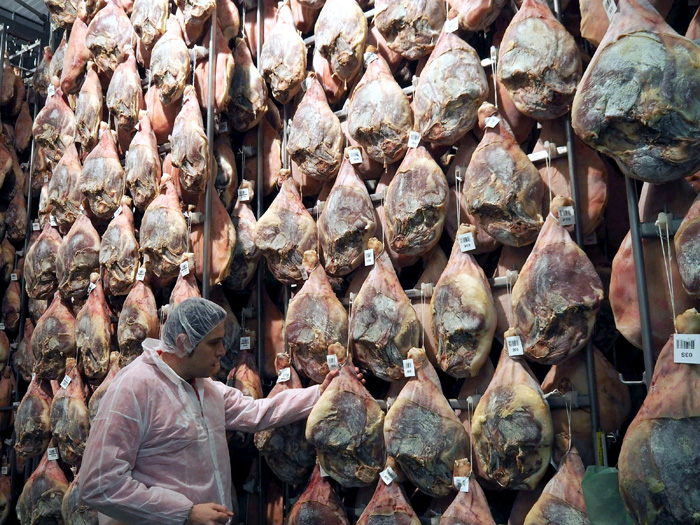
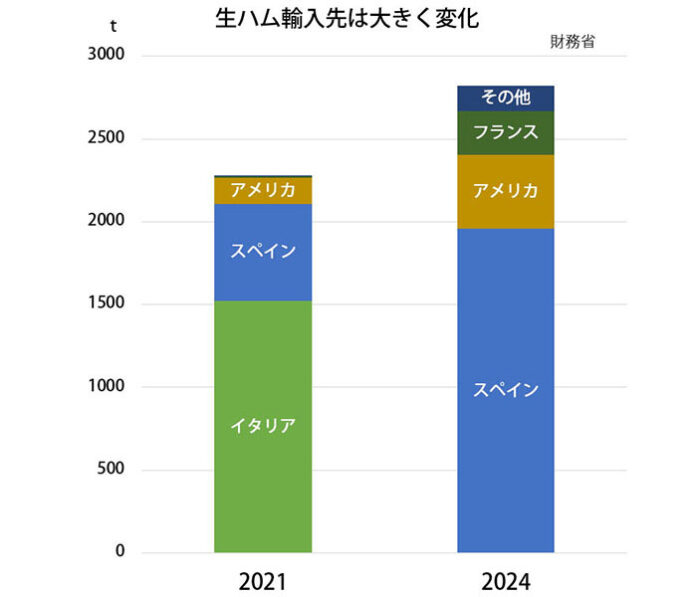
Italian prosciutto, which once accounted for nearly 70% of Japan’s prosciutto imports, has also been under an import ban since January 2022 due to ASF.
In the intervening period, restaurants and distributors shifted to substitutes from other countries, with Spanish prosciutto emerging as the dominant alternative, accounting for 70% of imports. Including French and American products, overall prosciutto imports grew by 24% over the three years through last year.
Once domestic inventories of prosciutto are exhausted, a further shift to products from other countries will be unavoidable — but securing sufficient volume quickly enough to meet the expanded market will be difficult. The timeline for resuming imports remains unclear, and given the Italian case, where the ban has now been in effect for nearly four years, a response that anticipates a prolonged disruption will be essential.