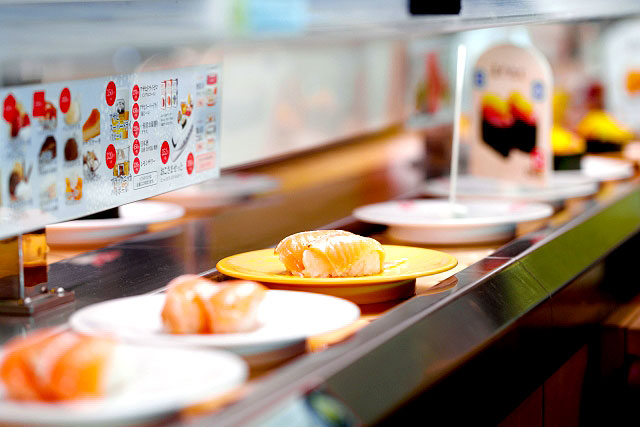
Sushi enjoys great popularity both in Japan and abroad as a food that represents Japanese cuisine. Gari—pickled ginger, sushi’s well-known supporting player—has likewise expanded in demand along with the growth of the sushi market.
In recent years, however, the market environment has changed significantly, owing not only to higher raw-material, logistics, and labor costs, but also to consolidation around major chains and a decline in independent sushi restaurants. Against this backdrop, ginger processors are working to improve quality and create higher added value, while also expanding applications and cultivating new demand by leveraging ginger-processing technologies.
In the sushi industry, the main sales channel for gari, major conveyor-belt sushi chains and high-priced establishments benefiting from inbound demand have remained steady. Meanwhile, independently operated counter-style sushi restaurants face challenges including the difficulty of passing on higher costs and a shortage of successors. Under these circumstances, consolidation is advancing toward major and leading establishments.
In particular, rising fuel prices in recent years have reduced the number of fishing vessels going out to sea. Shortages of seafood have become pronounced, making it difficult for both chain and independent restaurants to procure seasonal fish on a stable basis. Key ingredients such as nori seaweed and rice also remain at high price levels, placing pressure on sushi restaurants’ profitability. Wholesalers supplying seafood and ancillary materials to sushi restaurants also face the issues of a shrinking customer base and lower transaction volumes, and the market as a whole is showing signs of contraction.
The environment surrounding gari is also severe. As the sushi industry struggles to respond to rising costs, an emphasis on price is becoming stronger for gari as well. While manufacturers are engaged in price-increase negotiations, they are sometimes told that customers may switch to other companies’ products.
In overseas markets, low-priced products from Chinese manufacturers are widely distributed, and in some cases the price gap with Japanese products reaches around fourfold. It is difficult to compete in terms of price competitiveness, and there appear to be limits to the expansion of overseas markets.
For this reason, ginger processors are seeking to further develop the domestic market. By applying processing technologies such as ginger cutting, drying, and seasoning, they are working to broaden applications beyond gari for sushi to include red pickled ginger, prepared foods, seasoning ingredients, and the bakery and confectionery sectors. While these initiatives are still at a developmental stage, examples leading to new adoption and expanded sales channels have begun to emerge. Application development using ginger-processing technologies is attracting attention as a new growth area.