Japanese tea is now at a major turning point.
Reports have indicated that in 2025, tea leaves harvested after the first flush—including aracha, or unrefined tea—rose in volume and traded at high prices. Overall, this provided a certain degree of support for tea farmers’ management.
On the other hand, in 2024, the industry faced a situation in which first-flush tea (aracha), the backbone of tea-farm management, could not find buyers such as tea wholesalers and trading companies.
Many tea farmers live alongside a range of challenges, including uncertainty over the outlet for their tea leaves and the prices they will receive, a shortage of successors, and rising production costs such as fertilizer and machinery expenses.
In recent years, tea wholesalers and trading companies have tended to seek raw tea leaves from the second flush onward, which have a wider range of uses, mainly as ingredients for bottled beverages, rather than first-flush tea intended for loose-leaf products.
This trend appears to reflect changes in consumers’ lifestyles and economic conditions. Demand for first-flush tea, used mainly for loose-leaf tea, has declined relatively as people move away from using teapots, with the result that final products appear to be less likely to be picked up by consumers.
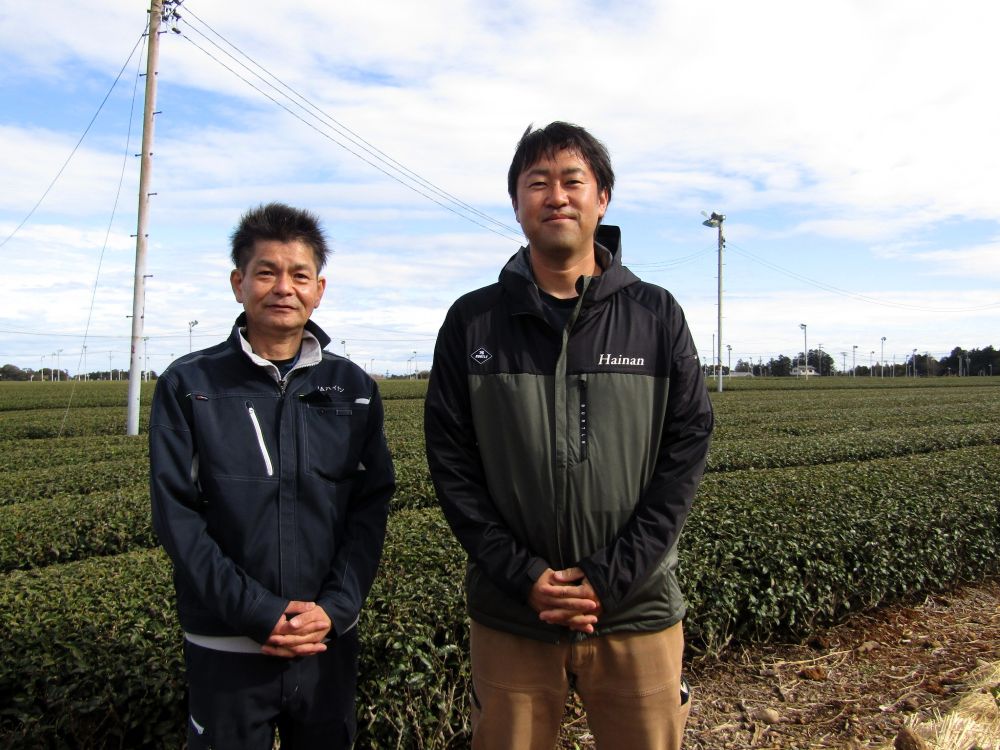
Amid strengthening demand for tea from the second flush onward, Yoshimoto Egawa, Deputy Manager of the Tea Industry Center at the Distribution and Sales Department of JA Hainan, and Tsuguhito Yokoyama, Vice President of the Katsumada Kaitaku Tea Agricultural Cooperative, both responded during an interview on March 26: “Without producing first-flush tea, tea from the second flush onward cannot be made.”
First-flush tea is also an important pillar supporting tea-farm management.
“Whether on a fresh-leaf basis or on an aracha basis after first-flush fresh leaves are processed at a factory, it accounts for around 60% to 70% of annual sales. Annual expenses are covered from this revenue, so if first-flush tea does not trade well, it is a severe blow,” Yokoyama stressed.
Yokoyama is now 40 years old. After graduating from high school, he studied for two years at the National Agriculture and Food Research Organization, then returned to his hometown to farm at around age 21. At the Katsumada Kaitaku Tea Agricultural Cooperative, the number of members has declined because of aging and a lack of successors. It now comprises 18 farming households managing approximately 31 hectares of tea fields.
The cooperative is a specialist agricultural cooperative dedicated to tea. It ships aracha while working with JA Hainan, which supplies it with agricultural chemicals, fertilizers, and materials. JA Hainan purchases tea from farmers in Makinohara, Shizuoka Prefecture, and ships it.
Its Most Difficult Period Yet
In 2024, the decision was made to leave first-flush tea unharvested
Yokoyama, who has overcome major hardships since becoming a farmer—including frost damage, reputational damage caused by the Great East Japan Earthquake and nuclear power plant accident, and lower demand during the COVID-19 pandemic—says, “It has never been as difficult as it is now.”
Freshly picked leaves are not kept in storage. They are processed into aracha at the factory on the same day and shipped the following morning. Ideally, they are sold out at an appropriate price at that point.
The first flush, in particular, is a race against time.
“In Shizuoka Prefecture’s market, the timing of transactions tends to affect prices, and the later sales are delayed, the more disadvantageous it becomes. We want to sell out even one day sooner to obtain the highest possible price. For example, something that sells today for 2,500 yen per kilogram will almost never sell for the same amount tomorrow. At a minimum, it falls by 50 to 100 yen, and in recent years it has sometimes fallen by 200 or 300 yen,” he pointed out.
Under such conditions, if buyers cannot be found—or if it is uncertain whether the tea will be purchased at an appropriate price—farmers can find themselves in a situation where “even when the tea fields reach harvest time, they cannot be harvested.”
If aracha is processed but buyers cannot be found, inventories continue to build up, causing price collapses and ultimately forcing farmers to sell at a giveaway price.
“On average, 600 to 700 kilograms of fresh leaves can be harvested from one tan—10 ares, or 1,000 square meters—of field. In the case of a 20-tan field, as much as roughly 15 tonnes may be harvested, and the factory operates at full capacity around the clock to handle it. Processing into aracha reduces the weight to about one-fifth, so 15 tonnes of fresh leaves produces three tonnes of aracha. Over the past two or three years, we have continued to see situations in which we made tea but could not sell it as hoped: we expected 2,500 yen per kilogram, but when all was said and done, it was 2,100 yen.”
For first-flush tea produced in 2024, the cooperative was unable to find buyers at appropriate prices and was forced to leave the crop unharvested.
“This was probably the first time we left tea unharvested because of low demand rather than a natural disaster. Prices fell to around 500 yen per kilogram, and at that level, it becomes unprofitable. The more tea we processed, the larger the losses became, so we were forced to make the unprecedented decision to leave first-flush tea unharvested,” he reflected.
He believes that the lack of buyers for first-flush tea was not due to its quality, but to changes in the supply-demand balance and to tea wholesalers holding back on purchases of first-flush tea in order to adjust product making with tea from the second flush onward.
“Farmers take joy in harvesting. Having put time and effort into cultivation, being forced to leave tea unharvested even though it can be picked is a tremendous shock—not simply because it does not make money,” he said.
Rising Matcha Demand
The issue of leaving farming faced by producers
Looking back on first-flush tea produced in 2025, Yokoyama said, “There was a clear divide among tea wholesalers between those that would buy and those that would not.” With buyers limited, “we somehow managed to sell everything in the end,” he said.
Meanwhile, the prices of aracha from the second flush onward surged as several factors, including the matcha boom, combined. While tea farmers’ earnings improved to a certain extent, he said this was not a situation that could be welcomed unreservedly.
“Last year was good, but when tea wholesalers tell us, ‘We do not know whether it will continue to sell from here on,’ that makes us uneasy as producers as well. When sales professionals say that, concerns that prices may fall again cannot be dispelled,” he confided.
Within the Hainan area, the customary practice is to harvest tea in three periods: the first flush, second flush, and autumn/winter bancha harvest.
Last year, as production fell for both the first and second flushes, demand that had not been met because purchases of first-flush tea were held back concentrated on tea from the second flush onward. In addition, the matcha boom led to a shift from sencha to tencha—the raw tea leaf used to make matcha—causing aracha prices to soar.
“Until the year before last, the pattern for second-flush tea was to start at around 1,200 yen per kilogram and eventually fall to 800 yen. Last year, it started at 1,300 yen and ended at 1,200 yen. Because there was almost no price difference, we heard that tea dealers could not combine tea leaves from different price ranges—as is normally done with second-flush tea—and could make only one product. Autumn/winter bancha had historically traded around 300 yen, and even in high-price periods only reached about 400 yen, but last year it averaged 1,850 yen, jumping to a level we had never seen before,” he explained.
Yokoyama visited Kagoshima himself to confirm rising demand for matcha.
“I learned that half of a 200-hectare-scale tea estate had been converted to tencha. Tea fields in the JA Hainan area currently total 1,300 hectares, and I was able to imagine 100 hectares disappearing from that total. It made me realize that the supply for sencha would become tight,” he said.
Although soaring prices after the second flush last year offered a glimmer of improvement in tea farmers’ profitability, the situation also has strong temporary elements, and it cannot be said that a clear outlook for the future has emerged. Some farmers have reportedly begun leaving the industry as profitability improves.
“Even if sales remain flat, expenses continue to rise. For example, machinery that once cost 1 million yen can now cost more than 5 million yen. There is a risk that investments will not be recovered, and many people leave farming when they have paid off their debts. What was shocking was the dissolution of a specialist agricultural cooperative with a well-known name and strong brand power. A negative chain reaction is also occurring, with people saying, ‘If that person quit, I will quit too,’” he noted.
Reducing Uncertainty Over Buyers
Building a system together with producers
Obstacles to sustainable tea farming include aging, a shortage of successors, soaring costs for materials and equipment, and unstable outlets for first-flush tea.
“The biggest issue was that first-flush tea had become difficult to sell. Even if we expand the fields, a situation like that in 2024, when we struggled to sell, places a heavy burden not only on management but also mentally,” Yokoyama said.
In this respect, Ito En’s “Tea Production Area Development Program,” which it has pursued since 1976, gives tea farmers an initiative through which they can foresee their sales outlet.
The Tea Production Area Development Program includes “contract cultivation,” under which tea farmers throughout Japan grow tea leaves required by Ito En, and the “New Production Area Program,” under which the company works to create, maintain, and expand tea fields on abandoned farmland and other land. Ito En works on both programs jointly with municipalities and businesses. Ito En purchases the entire volume of tea leaves harvested under both initiatives.
Contract cultivation by tea producers in Yoshida Town, Makinohara City, and Omaezaki City within the JA Hainan area began in 2015 with five hectares. Now in its 12th year, the program has reached just under 300 hectares—around 60 times its original scale.
Egawa of JA Hainan said: “We carefully explain the cost structure and actual circumstances at production sites, seeking understanding while consulting on the conditions that will enable sustainable production.”
The Katsumada Kaitaku Tea Agricultural Cooperative, to which Yokoyama belongs, also undertakes contract cultivation for Ito En as one component of its portfolio alongside tea leaves for deep-steamed tea.
“With contract cultivation, we only need to concentrate on producing tea that meets the standards, which is extremely helpful. Even when circumstances were very poor in 2024, it enabled us to stabilize our business without a drastic drop in sales, which is a major advantage,” he said.
While valuing such initiatives, Yokoyama says there are limits to what Ito En alone can do. For Japanese tea farmers to remain sustainable without being overwhelmed by comparatively inexpensive imported tea leaves, and for Japanese tea culture to be protected, high-priced first-flush tea needs to be sold steadily.
However, consumer conditions and market prices lie beyond tea farmers’ control. As something he can do himself, Yokoyama cites raising awareness of Japanese tea culture.
“I believe the priority is not for producing regions to compete with one another to regain production volume, but first to regain opportunities for people to drink tea. Tea can take many different forms. Even as people move away from teapots, if its form changes to bottled tea or powdered tea, there is still plenty of room for tea to be drunk by many people and for its reach to expand. What individuals can do is limited, so we should move forward with the cooperation of government and others,” he said.
He also sees the matcha boom as a positive sign.
“From the perspective of the tea industry, the matcha boom is extremely welcome, as it feels like a bright sign is beginning to emerge in an industry that had been in decline. Matcha is the focus now, but there is potential for people to turn their attention to sencha, deep-steamed tea, oolong tea, black tea, and other varieties as well,” he said hopefully.
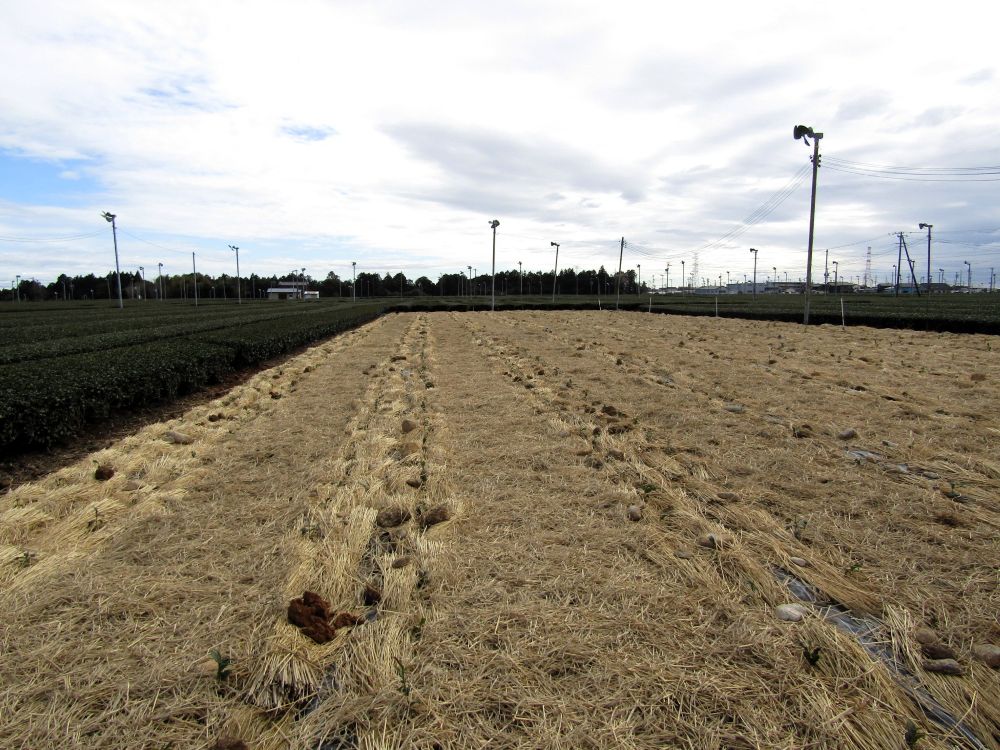
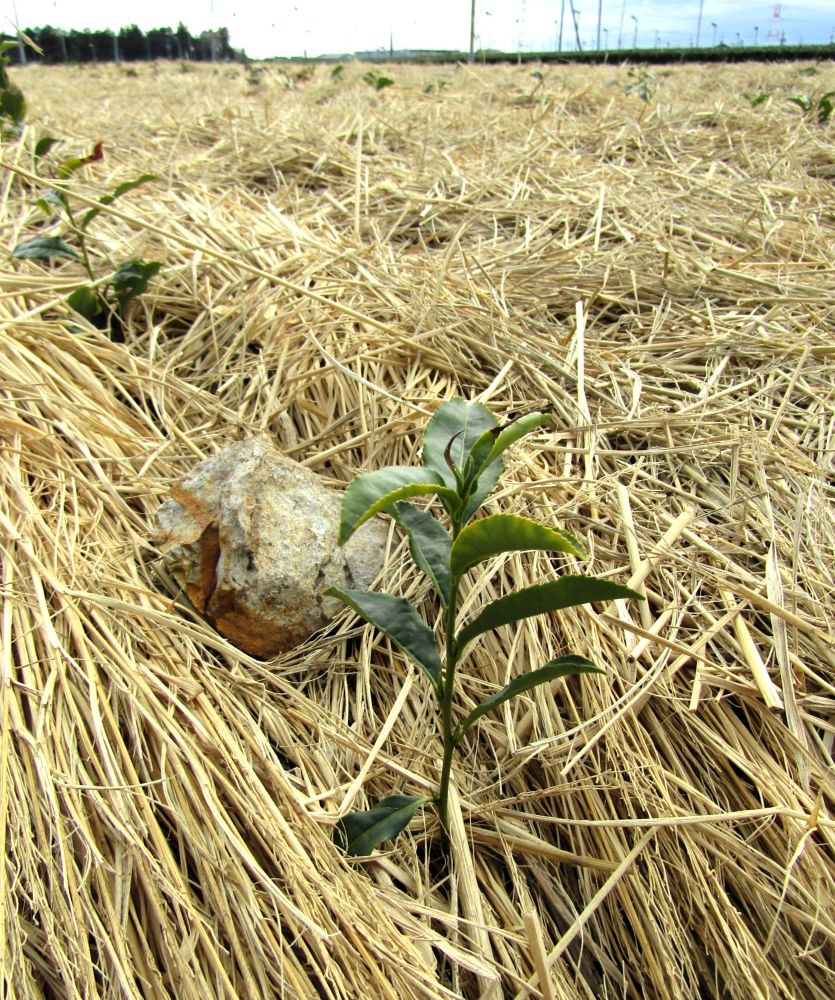
On the production side, to increase yield per tan, or 10 ares, he planted 200 seedlings of the new “Shizuyutaka” cultivar in March this year in a 10-are field where tea plants had been uprooted.
“Yabukita, the overwhelmingly common cultivar in Shizuoka Prefecture, has become less suited to the recent abnormal weather conditions. We will gradually replant with Shizuyutaka, which is said to produce overwhelmingly higher yields than Yabukita and to be more resistant to pests and diseases. Through such various efforts, we want people to find tea interesting within agriculture, pass it on to the next generation—even if not to my own son—and protect both the beautiful landscape of spreading tea fields and Japanese tea culture,” he said emphatically.
Understanding the value of Japanese tea and repeatedly choosing a cup worth choosing will connect Japanese tea culture and its production regions to the future. That choice rests not only with producers, but with every individual consumer.