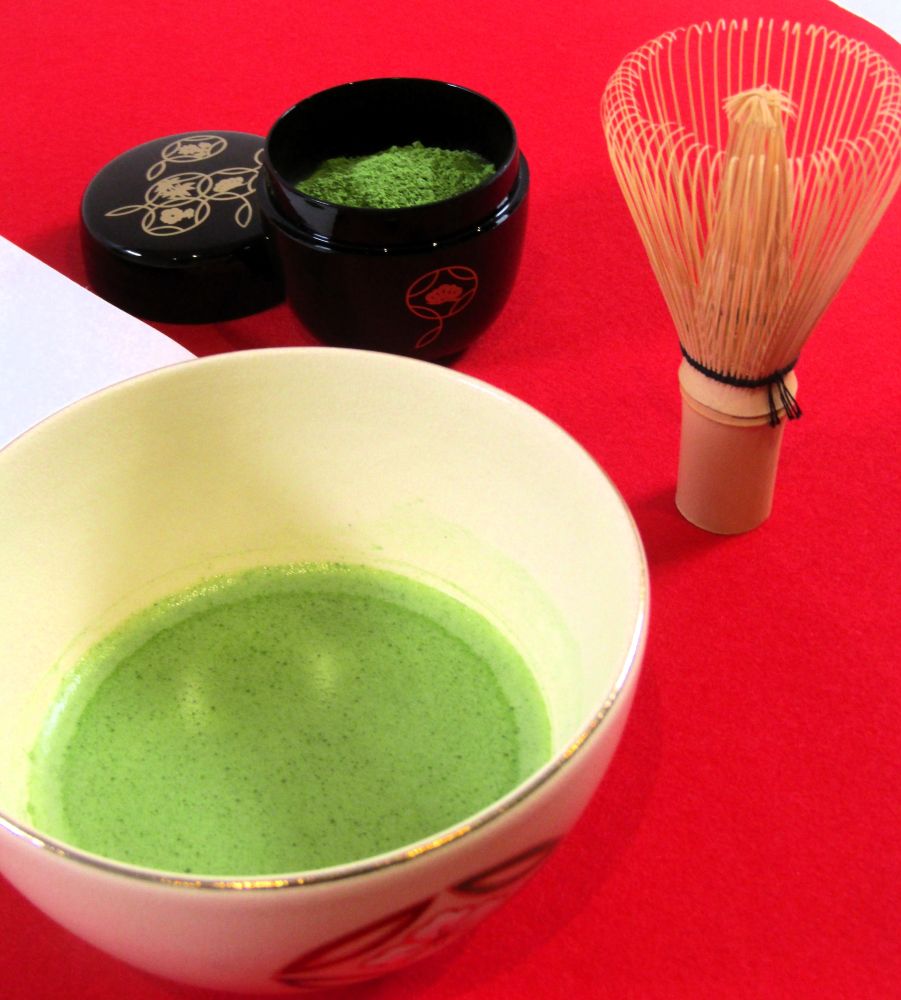
It has been revealed that Japanese tea is expected to be registered under the national Geographical Indication (GI) system.
While “Yame Traditional Hon Gyokuro” and “Fukamushi Kikugawa Tea” have already been GI-registered as regional Japanese tea products, there is currently no National GI—meaning a GI with the entire country as its production area—under the system administered by the Ministry of Agriculture, Forestry and Fisheries (MAFF).
The Japan Tea Central Association applied to MAFF for GI registration of Japanese tea as a National GI in October last year. If registered, it would become the second National GI after sake, which is registered under a system administered by the National Tax Agency.
The GI protection system protects, as regional intellectual property, the names of products with characteristics such as varieties developed over many years and established social reputations.
Behind the application for Japanese tea registration is the emergence of bad-faith trademark applications, including Chinese-made imitation products labeled “Uji Matcha,” as the distribution volume of tea products overseas increases.
A bad-faith trademark application refers to a situation in which a trademark already applied for or registered in Japan is applied for or registered as a trademark right overseas without authorization by a third party.
For example, if a bad-faith application for a Chinese-made imitation product called “Uji Matcha” were accepted, overseas trade in genuine Uji Matcha could be hindered.
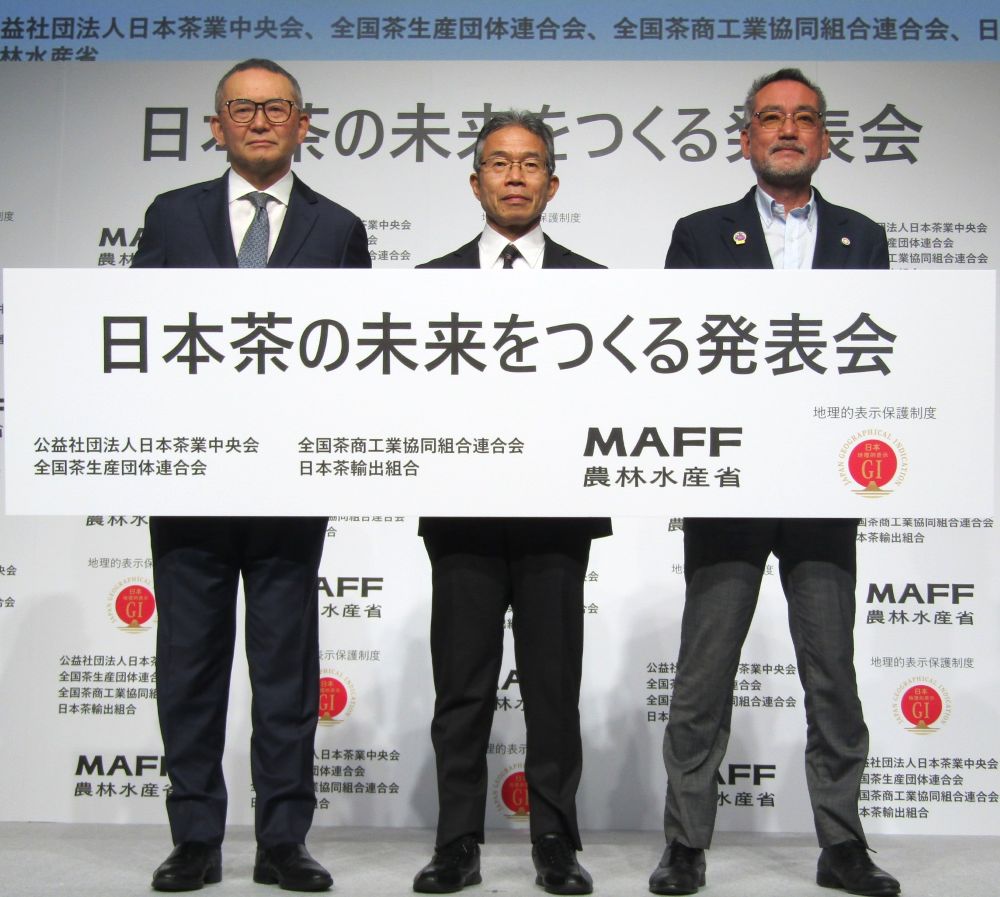
MAFF is currently accepting public comments on the Japanese tea registration application through June 11. The timing of registration, including whether it will be approved, is yet to be determined. However, if no objections are raised by a committee composed of academic experts, registration could come as early as late June.
Shin Sato, Director-General for Agricultural Production Promotion in the Minister’s Secretariat at MAFF, who is responsible for production promotion, said at a presentation on May 11: “I recognize that it is an extremely important initiative to differentiate Japanese tea from overseas products and enhance the brand value of high-quality Japanese tea. We have high expectations for the establishment of a national brand for Japanese tea.”
According to Ministry of Finance trade statistics, exports of Japanese tea (green tea) in 2025 doubled from the previous year to reach a record-high ¥72.1 billion.
Expectations are also high for branding powdered tea, including matcha, which has driven this growth.
“Particularly overseas, Chinese-produced matcha has a price advantage. It has not yet gone so far as to threaten the position of Japanese matcha, but it has begun to feel that way. With GI registration for Japanese tea, it will be possible to clearly distinguish it from Chinese-produced matcha, and we in the production-promotion division have very high expectations,” he said.
Isamu Nakayama, Director of JFOODO—the Japan Food Product Overseas Promotion Center—expects the matcha boom overseas to help invigorate Japanese tea as a whole.
“It is important to first use matcha as a breakthrough to expand consumption. Through that process, we will communicate about Japanese tea to overseas consumers as well. We also have very high expectations domestically. It is an important point for exports that inbound visitors learn about the genuine article in Japan, want it overseas, and become ambassadors,” he said.
Japanese tea eligible for use of the GI mark consists of non-fermented teas, including sencha, deep-steamed sencha, kabusecha, gyokuro, tencha (matcha), tamaryokucha, hojicha, bancha, and powdered tea. It must be made exclusively from Japanese-grown tea leaves, with processing and packaging completed in Japan.
Semi-fermented oolong tea and fermented black tea are not included.
“Products using Japanese tea” refers to tea beverages, instant tea, and similar products processed using only non-fermented tea.
If registration is approved, the GI protection system is expected to allow blends containing overseas-produced tea as long as Japanese tea accounts for a certain proportion. However, the Japan Tea Central Association plans to establish voluntary standards and promote only tea that is 100% Japanese tea as “Japanese tea” overseas. It will permit use of the “Japanese tea” designation and the GI mark only for Japanese tea produced by its members, including the All Japan Tea Federation and the National Federation of Tea Production Associations, and by constituent members under those organizations.
Sadami Suzuki, Executive Managing Director of the Japan Tea Central Association, expects the initiative not only to protect the intellectual property of Japanese tea as a whole and further expand exports, but also to deepen recognition of Japanese tea’s value within Japan.
“By displaying the GI mark, we can clearly communicate that Japanese tea is genuinely domestically produced. However, simply affixing the GI mark is not enough. We believe that seminars and promotional activities will be necessary to spread Japanese tea,” he said.
He also indicated an intention to thoroughly implement country-of-origin labeling for raw materials so that Japanese consumers can distinguish Japanese tea from non-fermented tea leaves produced overseas.